More than 50 years after Apollo 17 (1972), humanity has reached a new milestone in its return to the Moon. With the Artemis II mission, NASA has successfully completed the first crewed flight of the Artemis program, marking a major turning point in modern lunar exploration.
Beyond this achievement, the mission has made it possible to validate key technologies and collect essential data for future exploration. What are the lessons learned, the discoveries, and the concrete outcomes of this mission? And how does Artemis II prepare for a sustainable human return to the Moon?
Artemis II: a historic crewed flight scheduled for April 2026
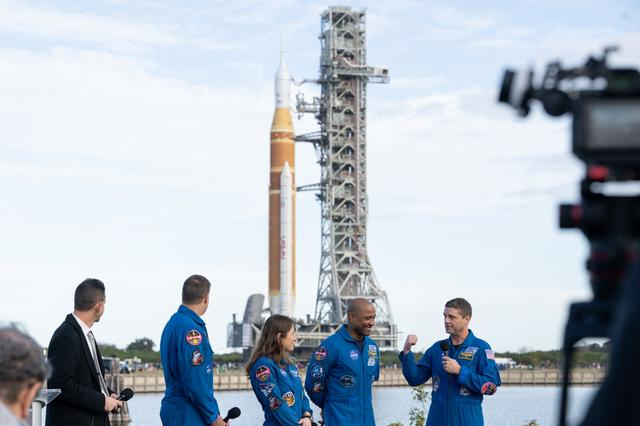
Following Artemis I in 2022 (an uncrewed flight that validated the SLS rocket and Orion capsule), Artemis II will be the first crewed mission of the Artemis program.
Mission overview:
- Approximately 10 days in flight
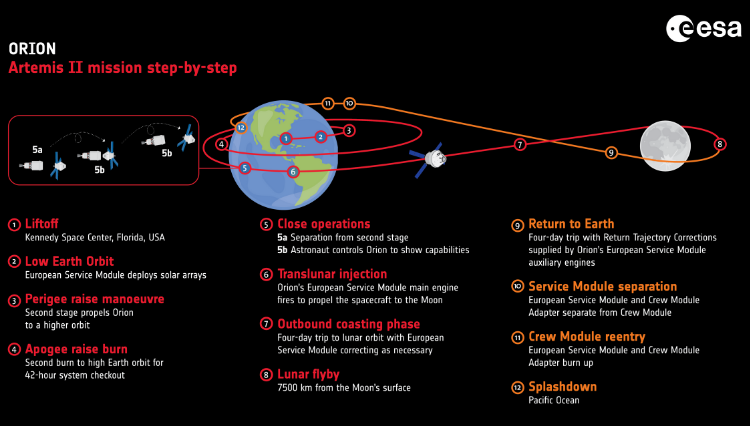
- A flyby of the Moon without landing
- A distant trajectory around the far side
- Splashdown in the Pacific Ocean
The crew will travel nearly 450,000 kilometers, reaching up to about 9,000 km beyond the Moon, an unprecedented distance for a crewed mission.
Main objective:
To validate in real conditions the navigation, propulsion, life-support systems, and the human ability to operate in deep space.
Why was Artemis II postponed?
Originally planned for 2024, the mission has been delayed to April 2026.
Main reasons:
- In-depth analysis of Orion’s heat shield after Artemis I
- Adjustments to safety systems
- Overall reorganization of the Artemis program
Unlike the space race of the 1960s, NASA is now adopting a more gradual and cautious approach. The goal is no longer speed, but sustainability.
Artemis II launch date and time (updated)
The launch of Artemis II is currently scheduled for April 1 at 18:24 (local time, Florida), corresponding to April 2 at 00:24 (Paris time).
This first attempt falls within a 120-minute launch window, during which all conditions must be met for liftoff.
As with any space mission, several factors may cause a last-minute delay, especially weather conditions, which remain the most unpredictable element.
In case of cancellation, a new launch attempt is already planned for April 3 at 01:22 (Paris time).
These precise time slots illustrate the complexity of crewed missions: each launch depends on a strict alignment of technical, orbital, and environmental constraints.
Where does the Artemis program stand?
NASA has recently reorganized its lunar schedule.
New roadmap:
- Artemis II (April 2026): crewed flight around the Moon
- Artemis III (2027): crewed mission, but without a lunar landing
→ Planned rendezvous in Earth orbit with one or more landers - Artemis IV and V (from 2028): first lunar landings of the program
A crewed lunar landing is therefore officially postponed to 2028.
This strategic evolution aims to:
- secure landing systems
- test orbital infrastructures
- develop the lunar Gateway station
- prepare a sustainable presence
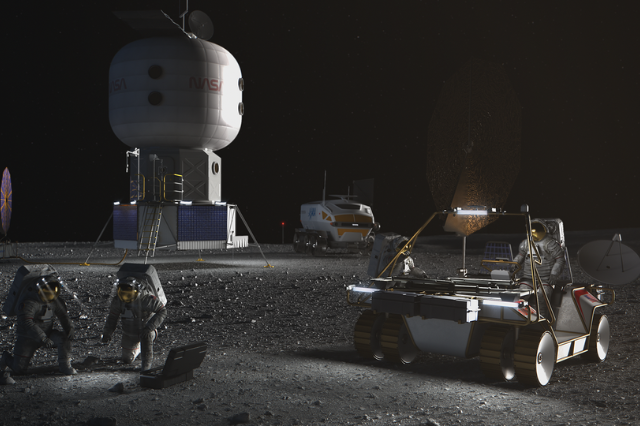
The Artemis program is no longer just about “returning,” but about establishing a long-term presence on the Moon.
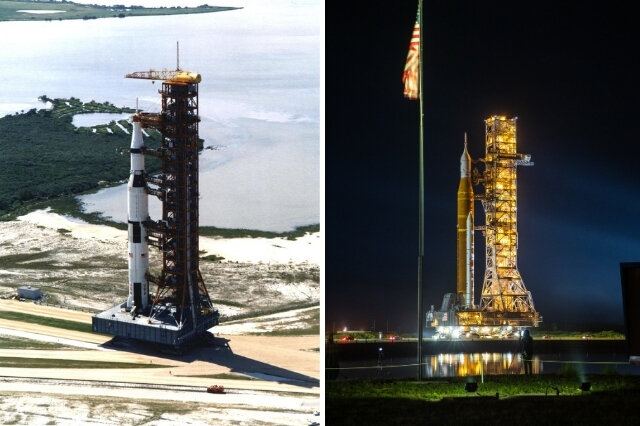
Artemis vs Apollo: a shift in vision
Apollo (1969–1972):
- Short missions
- Political objective
- Race against the USSR
Artemis:
- Long-term vision
- International cooperation
- Lunar infrastructure
- Preparation for Mars
The challenge is no longer a one-time achievement, but building a lunar ecosystem.
A strategic international cooperation
Artemis II highlights a key reality: modern space exploration is collaborative.
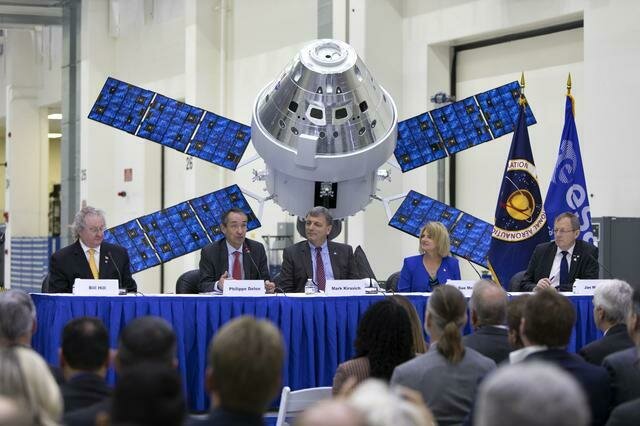
The European Space Agency (ESA) provides the European Service Module (ESM) for the Orion capsule.
This module ensures:
- main propulsion
- power generation
- thermal control
- part of the life-support system
Without Europe, Orion could not operate. The return to the Moon is therefore an international project.
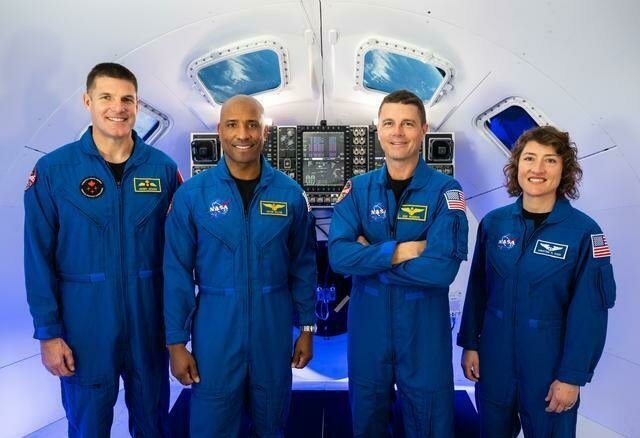
A crew symbolizing a new era
On board Artemis II:
- Christina Koch – first woman to travel around the Moon
- Victor Glover – first Black man to take part in a lunar mission
- Jeremy Hansen – first Canadian to fly to the Moon
- Reid Wiseman – mission commander
Artemis represents a more inclusive and globally representative era of exploration.
The key moment: the communications blackout
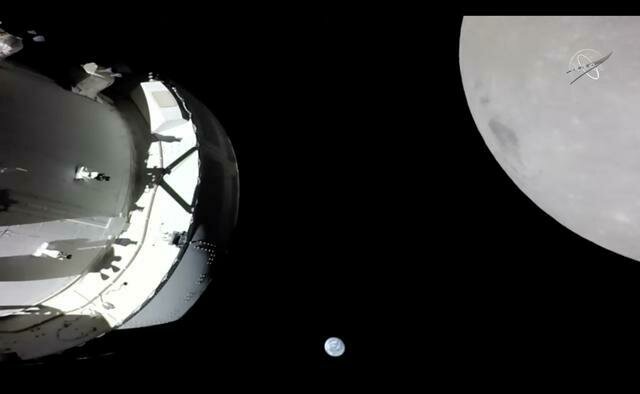
During its passage behind the Moon, Orion will experience around 45 minutes without communication with Earth.
- No radio.
- No telemetry.
A striking but planned moment, designed to test the crew’s full autonomy and the robustness of onboard systems.
Did you know?
At the Euro Space Center, a critical situation lies at the heart of the Lunar·X experience. Participants take part in an immersive mission to the Moon, facing unexpected events and crucial decisions.
Will you manage to achieve a successful lunar landing, even when problems arise during the mission?
A moment of suspense, certainly, but above all a crucial step in validating system robustness and the crew’s ability to operate autonomously in deep space.
Fun fact: the heaviest vehicle ever built on Earth
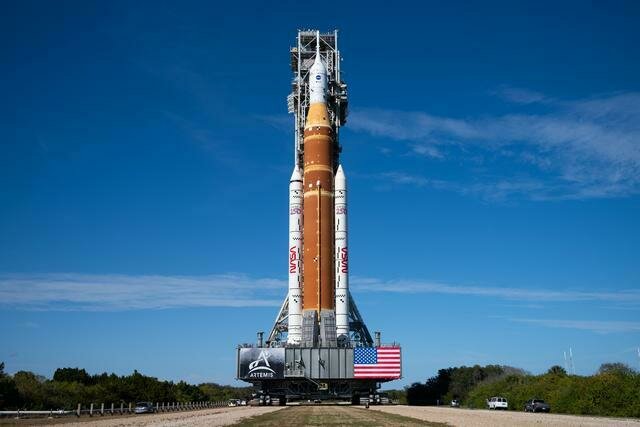
Even before leaving Earth, Artemis II relies on spectacular logistical achievements.
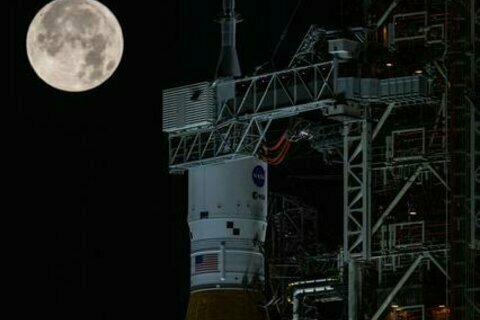
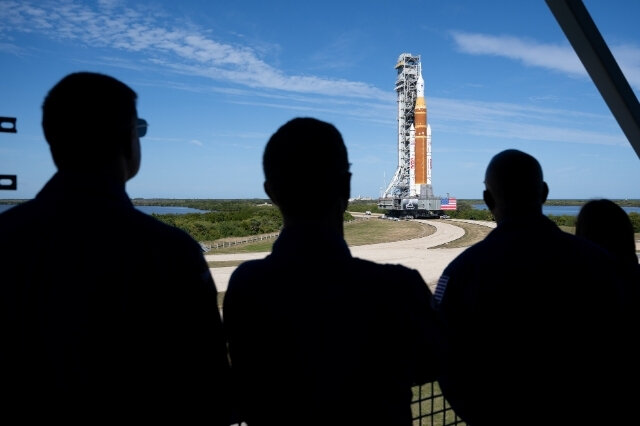
To transport the SLS rocket to the Kennedy Space Center launch pad, NASA uses the Crawler-Transporter 2 (CT-2).
Some impressive figures:
- Over 3,000 tons
- 40 meters long
- 35 meters wide
- Each track link weighs nearly one ton
Proof that space exploration begins… long before liftoff.
Scientific discoveries and contributions of the Artemis II mission
Updated: April 23, 2026
Even though the Artemis II mission does not include a lunar landing, it plays a key role in advancing lunar exploration. It enables the collection of essential data, both scientific and technical needed to prepare future crewed missions to the Moon and beyond.
Among the observations already made during previous Artemis missions and enhanced by the instruments onboard Orion, some findings deepen our understanding of the lunar surface. Previously poorly documented impact craters have been identified, revealing intense ancient activity linked to asteroid collisions.
“This shows how important the Moon is in protecting Earth,” explains Pierre-Emmanuel Paulis, Head of Education at the Euro Space Center.
By attracting some of these celestial objects, the Moon indeed plays an indirect protective role for our planet.
Essential technical contributions for future missions
Beyond observations, Artemis II primarily serves to validate critical technologies for the return to the Moon.
Heat shield
Analyses of Orion’s heat shield show a notable improvement compared to Artemis I. The material loss observed has been significantly reduced, with performance consistent with ground-based tests. This is a key element in ensuring astronaut safety during re-entry into Earth’s atmosphere.
SLS launcher
The SLS rocket met its objectives for this flight, confirming the reliability of this new-generation launcher. Improvements made to launch infrastructure also helped limit damage to the launch pad, despite the exceptional power of liftoff.
Life support systems and crew operations
The mission made it possible to collect essential data on life support systems, onboard equipment, and living conditions in deep space. This information is crucial for preparing longer missions, particularly to Mars.
An identified point of attention
An anomaly was detected in the urine evacuation system. Although it had no major consequences, this type of incident helps identify concrete areas for improvement for upcoming missions, particularly Artemis III.
Spectacular observations from space
The mission also captured impressive images, offering a new perspective on our solar system.
Among them:
- An “Earthset,” where Earth disappears over the lunar horizon, echoing the famous “Earthrise” photo from Apollo 8
- A solar eclipse observed from space, with several planets visible in the same frame
- Highly detailed images of the Milky Way
These images are not only spectacular, they also contribute to the study of the space environment and the preparation of future crewed missions.

Understanding Artemis today
The Artemis program marks a new era in space exploration:
- Progressive return to the Moon
- International cooperation
- Sustainable infrastructure
- Preparation for future missions to Mars
What if you experienced this adventure up close? Back To The Moon immerses you in a sensory and educational experience to better understand, feel, and imagine the future of lunar exploration.
Event link: https://www.eurospacecenter.be/en/agenda/consult/16