Are you looking for a science camp in Belgium for a curious child or teenager eager to understand the world around them?
At the Euro Space Center, science is discovered differently. Physics, astronomy, engineering, and technology come to life through hands-on experiments, building projects, and space missions. Understanding science in a fun way through space means, for example, discovering why a rocket takes off, feeling the effects of gravity, programming a rover, or building a satellite.
Located in Transinne, in the municipality of Libin (Province of Luxembourg), the Euro Space Center offers various space, science, and technology camps for children and teenagers during school holidays.
A Science Camp Where You Learn by Experimenting
A scientific concept often becomes much easier to understand when you can test it yourself. During the camps, young people observe, build, program, measure, and experiment before understanding the phenomena behind their activities. Here, science isn't just explained: it is used to accomplish a mission.
Understanding Physics… by Training Like an Astronaut
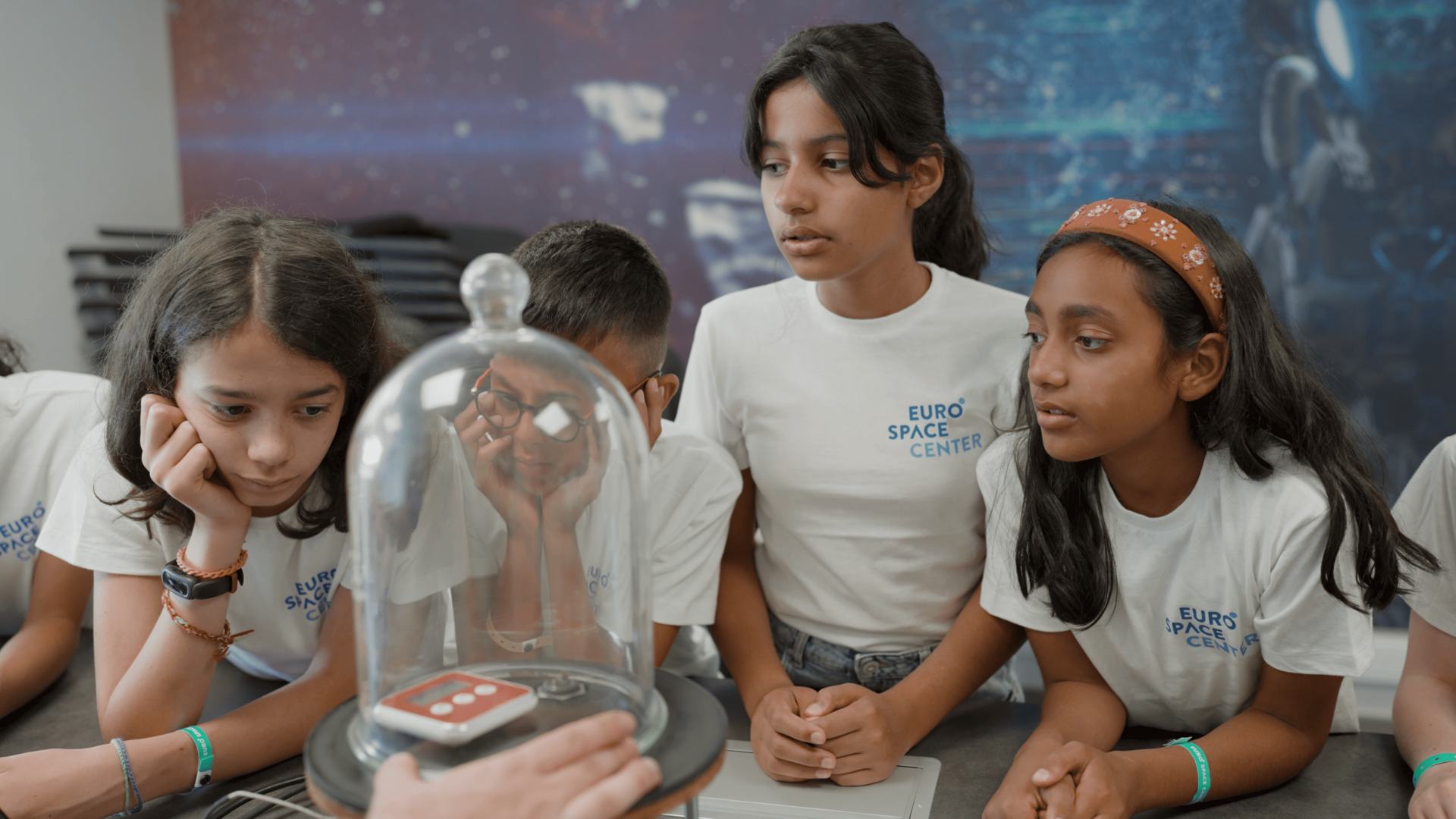
The Astronaut camp, aimed at ages 9 to 18, approaches science through direct experimentation. Lunar and Martian gravity, acceleration, vacuum, pressure, action-reaction, and microgravity: behind the activities inspired by space training lie numerous physical phenomena.
Young people don't just hear about them: they feel them, observe them, and then seek to understand what just happened.
Build, Program, Experiment: When Young People Become Engineers
Science doesn't stop at the physics of the human body or astronaut training. Several camps also immerse young people in the world of engineering and space technologies.
Understanding Propulsion by Building a Rocket
How do you launch a rocket? How do you improve its flight? Why are some trajectories more stable than others?
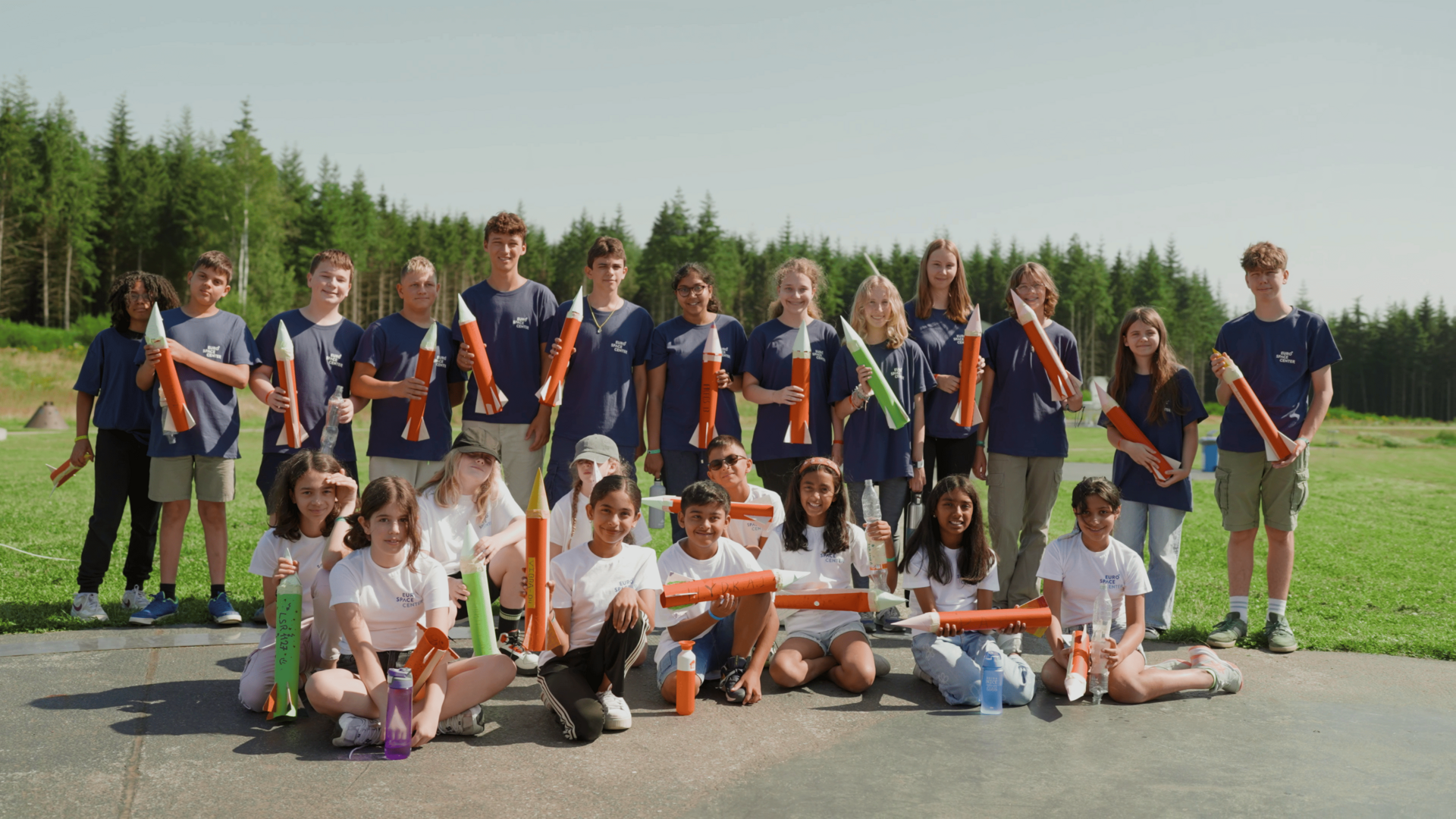
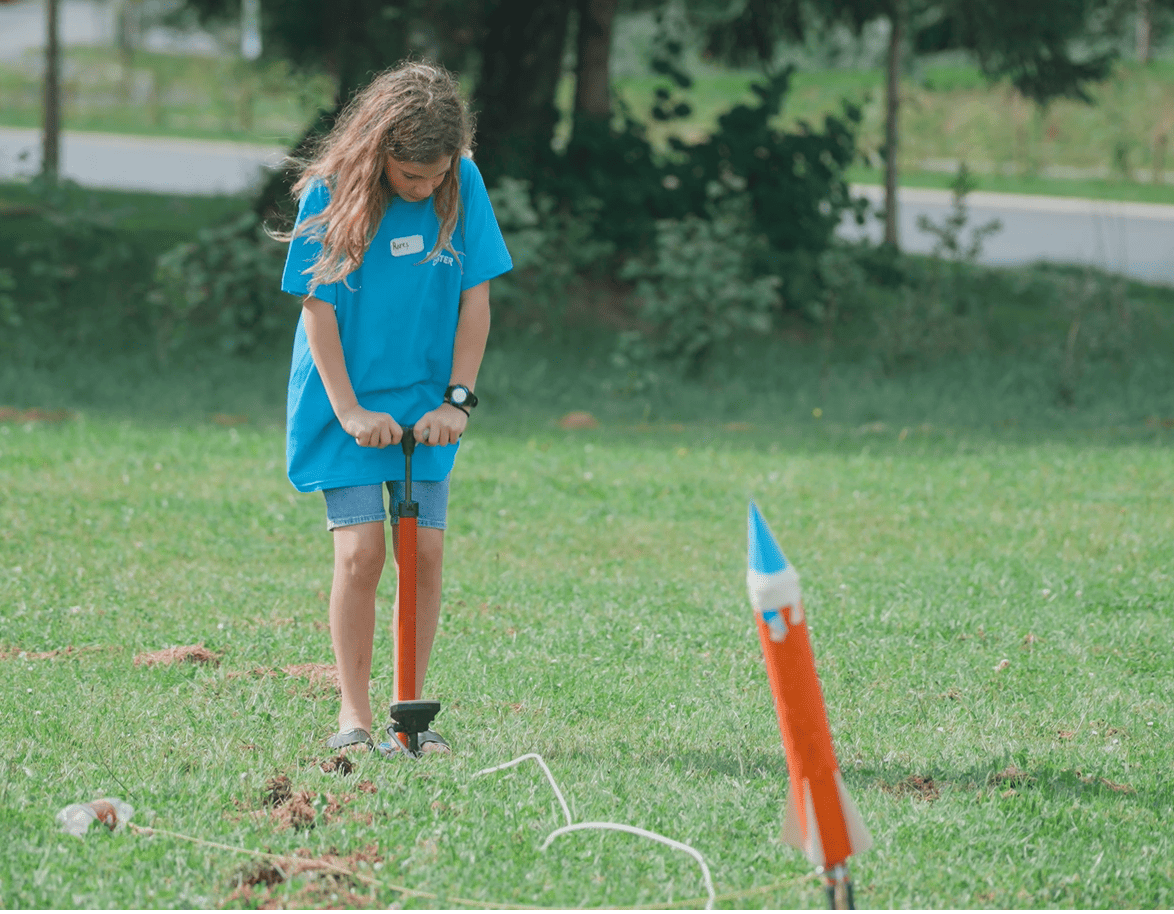
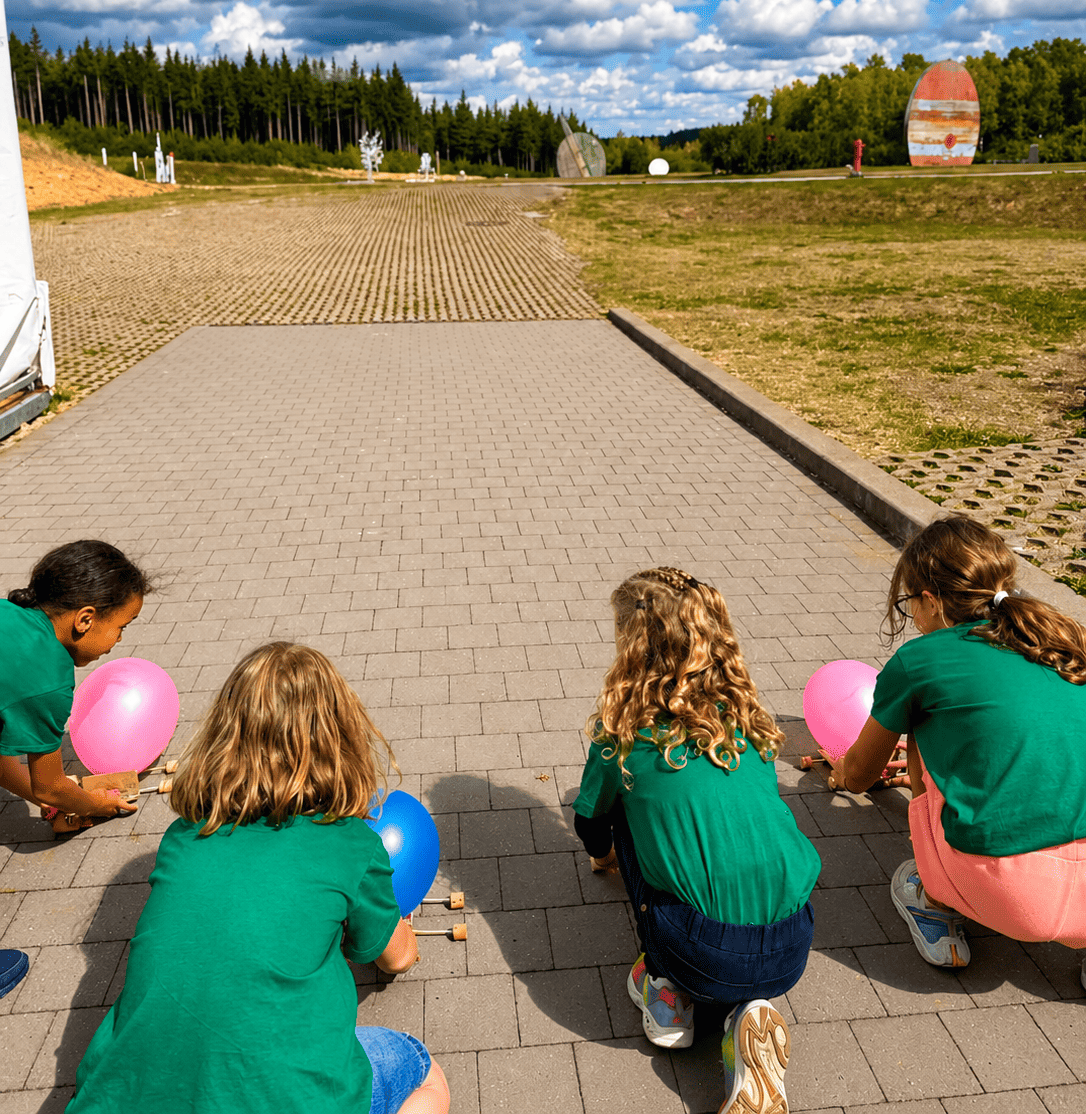
The Rocket camp ((only available in French) transforms these questions into a concrete project. Designed for ages 11 to 18, the Rocket camp plunges young people into the physics of spaceflight. Propulsion, pressure, stability, and action-reaction all make complete sense when you have to design, test, adjust, and then launch your very own rocket.
Build, test, observe, correct: a true engineering process.
Programming Robots to Explore
On Mars, sending a scientist to inspect every rock or landscape is impossible. Robots therefore become the eyes and hands of researchers.
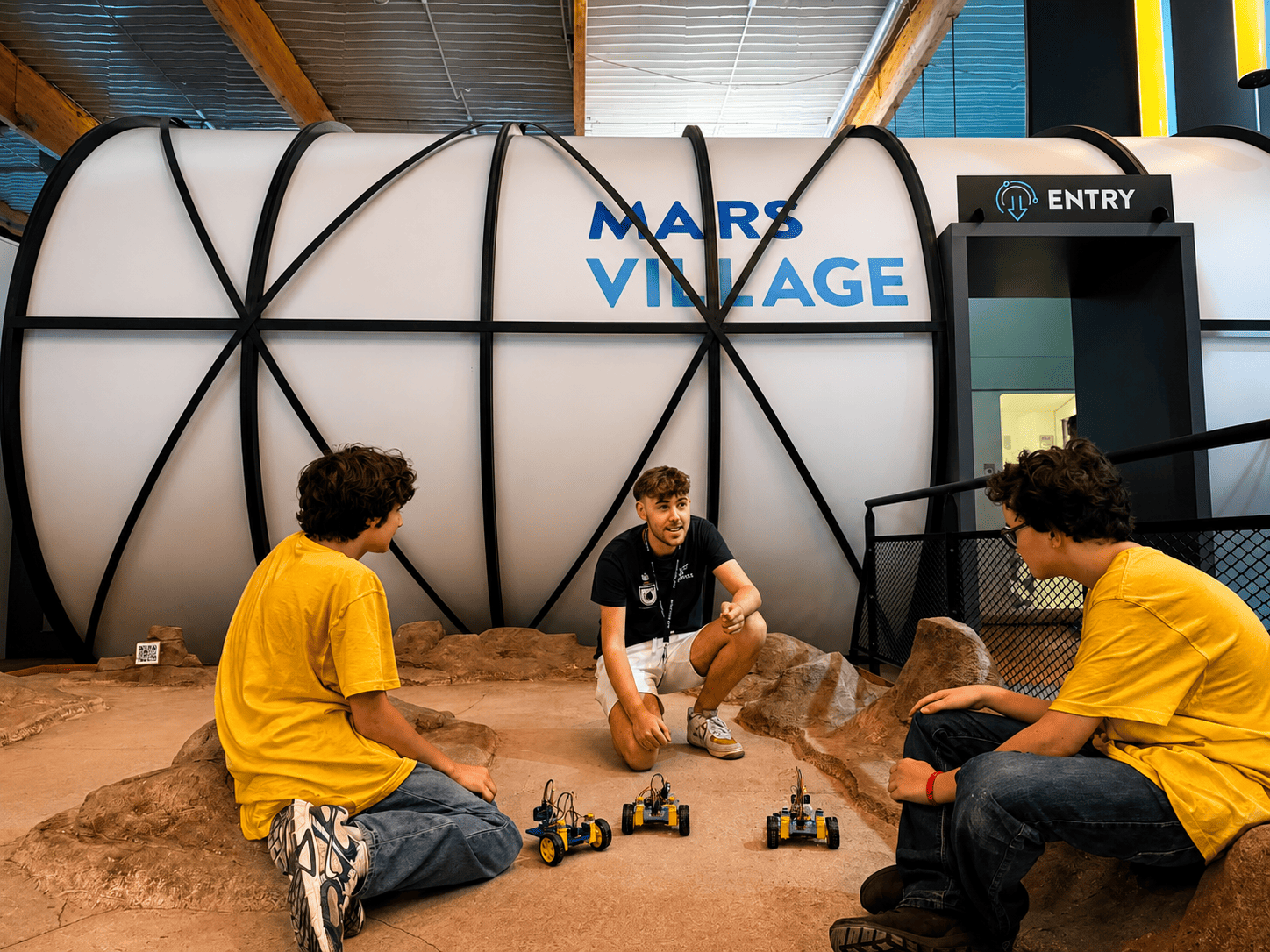
The Robotics camp (only available in French), designed for ages 13 to 18, combines programming and scientific exploration. Young people learn to develop and program robots capable of interacting with their environment—just like those used to explore hard-to-reach terrain or gather data.
Building a Satellite to Better Understand Earth
Communicating with Space
How can a signal sent from Earth reach a satellite? How does an antenna work? And how do we receive information coming from space?
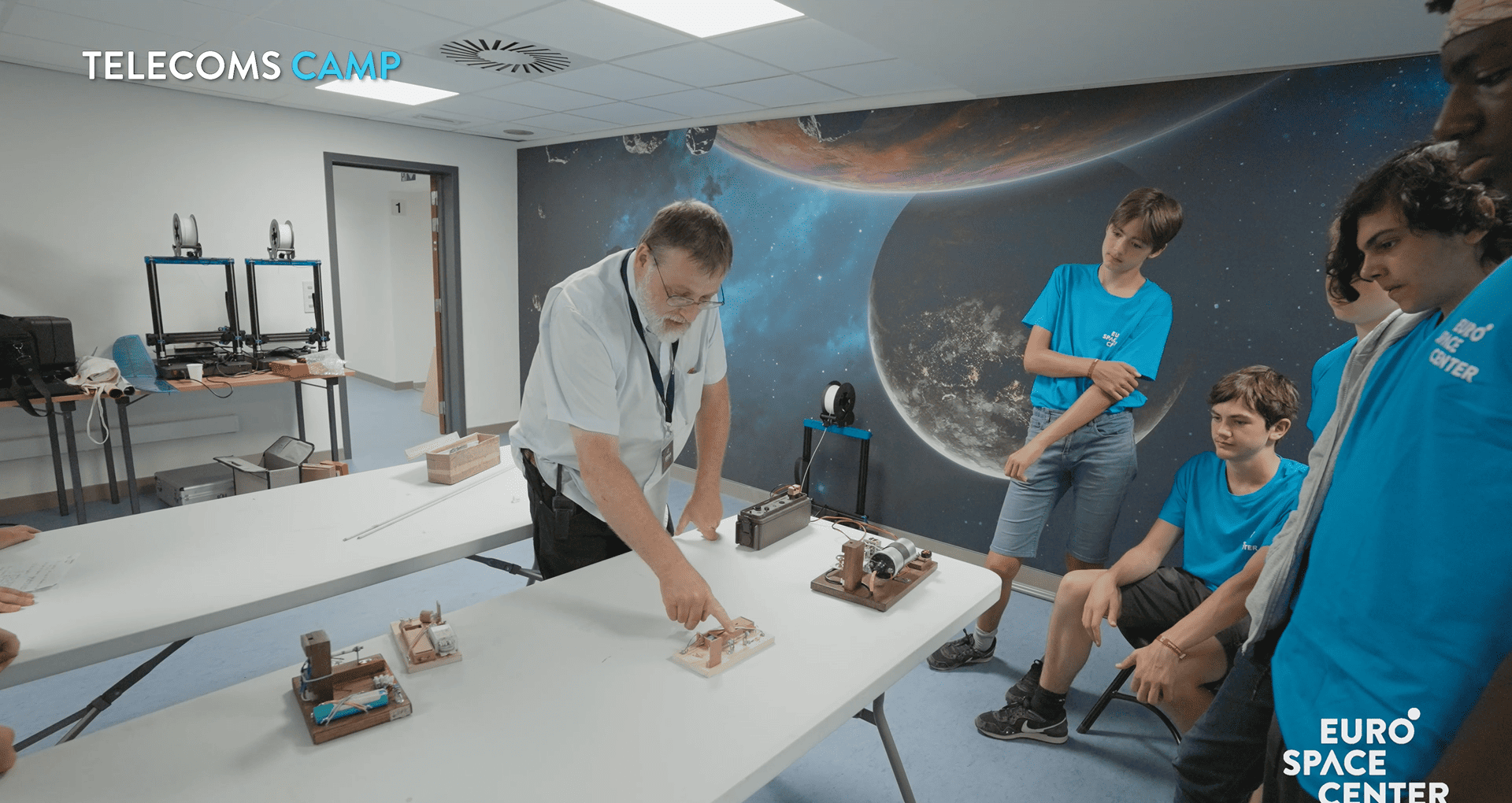
The Telecommunications camp, (only avalaible in French) designed for ages 13 to 18, allows participants to explore waves, electricity, antennas, and radio communications. Participants handle equipment, capture satellite signals, and discover how information can travel between Earth and space. The program can also lead to preparing for the exam to obtain the ON3 amateur radio license.
Which Science Camp to Choose?
Not all young people enjoy science in the same way. Some want to understand how a rocket works, while others prefer observing the stars, programming, or building.
| Camp | Age | What you explore | Language |
| Astronaut Junior | 6–8 years | First experiments around space and physics | French |
| Astronomy Junior | 6–8 years | Earth, gravity, stars, galaxies, and the Universe | French |
| Astronaut | 9–18 years | Gravity, pressure, motion, action-reaction | French, English, Dutch |
| Rocket | 11–18 years | Propulsion, pressure, stability, engineering | French |
| Robotics | 13–18 years | Programming, robots, and exploration | French |
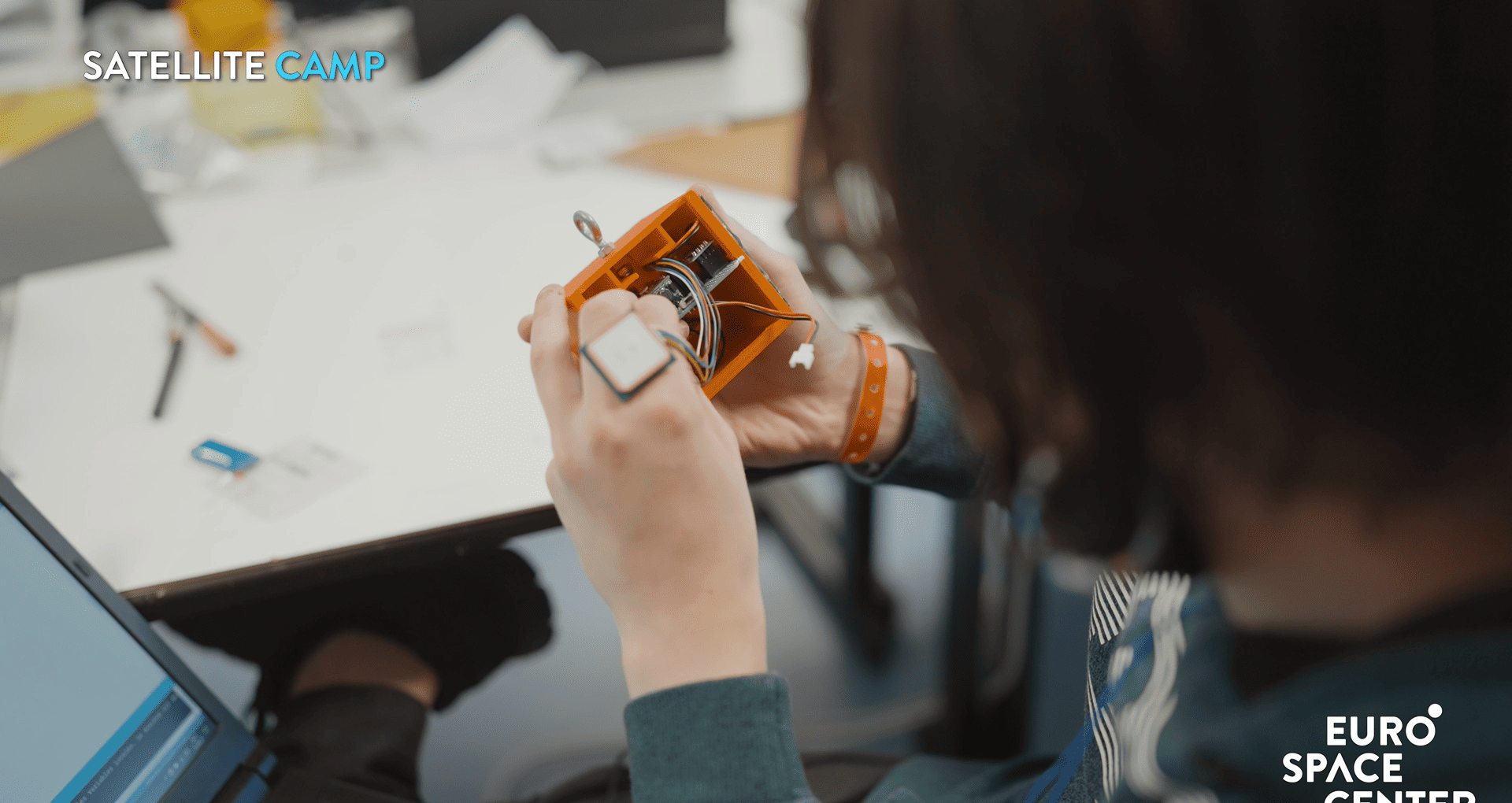
| Satellites | 13–18 years | Sensors, atmospheric data, Earth observation | French |
| Telecommunications | 13–18 years | Waves, radio, electronics, and satellites | French |
Science Camps Starting at Age 6
You don't need to wait for adolescence to start exploring science. Science is discovered at a very young age. For children aged 6 to 8, the Euro Space Center offers two complementary approaches.
With Astronaut Junior, children primarily learn by experimenting: they experience various space activities and discover the scientific phenomena behind what they feel.
Astronomy Junior focuses more on observation, explanations, and hands-on crafts. Gravity on Earth and other celestial bodies, the Earth's rotation and revolution, galaxies, black holes, and the life cycle of stars: the Universe gradually becomes easier to understand.
Two complementary ways to spark scientific curiosity starting at age 6: feeling and experimenting on one side, observing and understanding on the other.
Where to Attend a Science Camp in Belgium?
Located in Transinne, in the municipality of Libin (Province of Luxembourg), the Euro Space Center organizes camps for children and teenagers during school holidays, where science and technology are explored through space exploration.
Physics, astronomy, programming, robotics, propulsion, satellites, or telecommunications: learning takes place through experiments, hands-on workshops, and concrete projects.
An approach particularly suited to young people who like to understand how things work and prefer learning by doing rather than relying solely on theory.
How Does a Camp Week Work?
Beyond the scientific workshops, a camp week is also a true shared experience: full days of activities, social living with fellow campers, supervision by our team, and options for either day camp or residential stay (boarding).
To explore the day-by-day weekly program, supervision details, practical organization, and our tips for choosing the right camp, read our full article: Kids' Camps in Wallonia: An Immersive Camp Experience During School Holidays.