05/01/2026
Space fascinates children: rockets blasting off into the unknown, astronauts in zero gravity, distant planets… What if this passion became a way to learn through play ?
At the Euro Space Center, located in Transinne in the Province of Luxembourg, in the heart of the Belgian Ardennes, young explorers dive into a unique space adventure where science becomes a living experience. Here, families discover the world of STEM (science, technology, engineering, and mathematics) without ever feeling like they’re at school.
When STEM becomes an exciting adventure
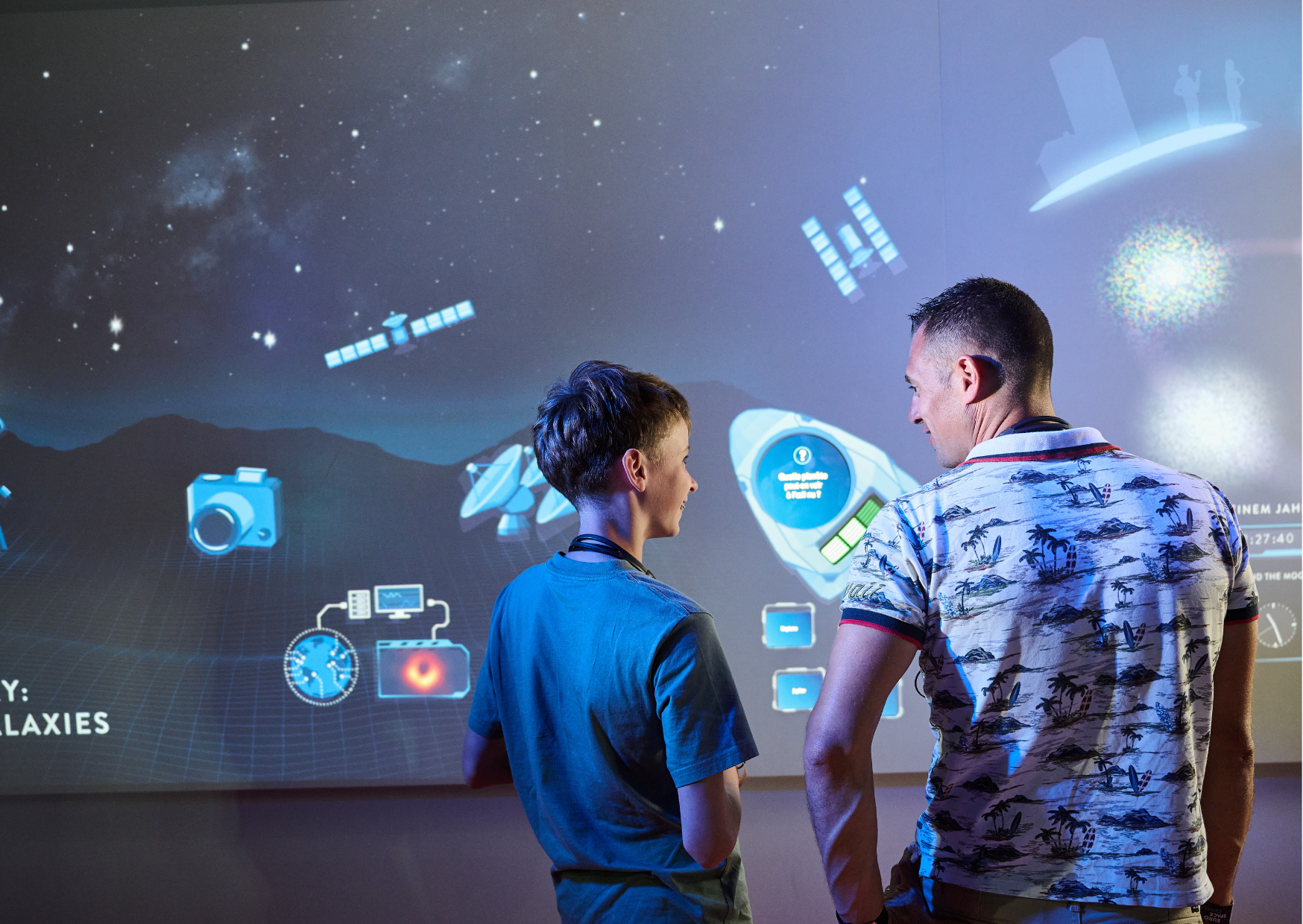
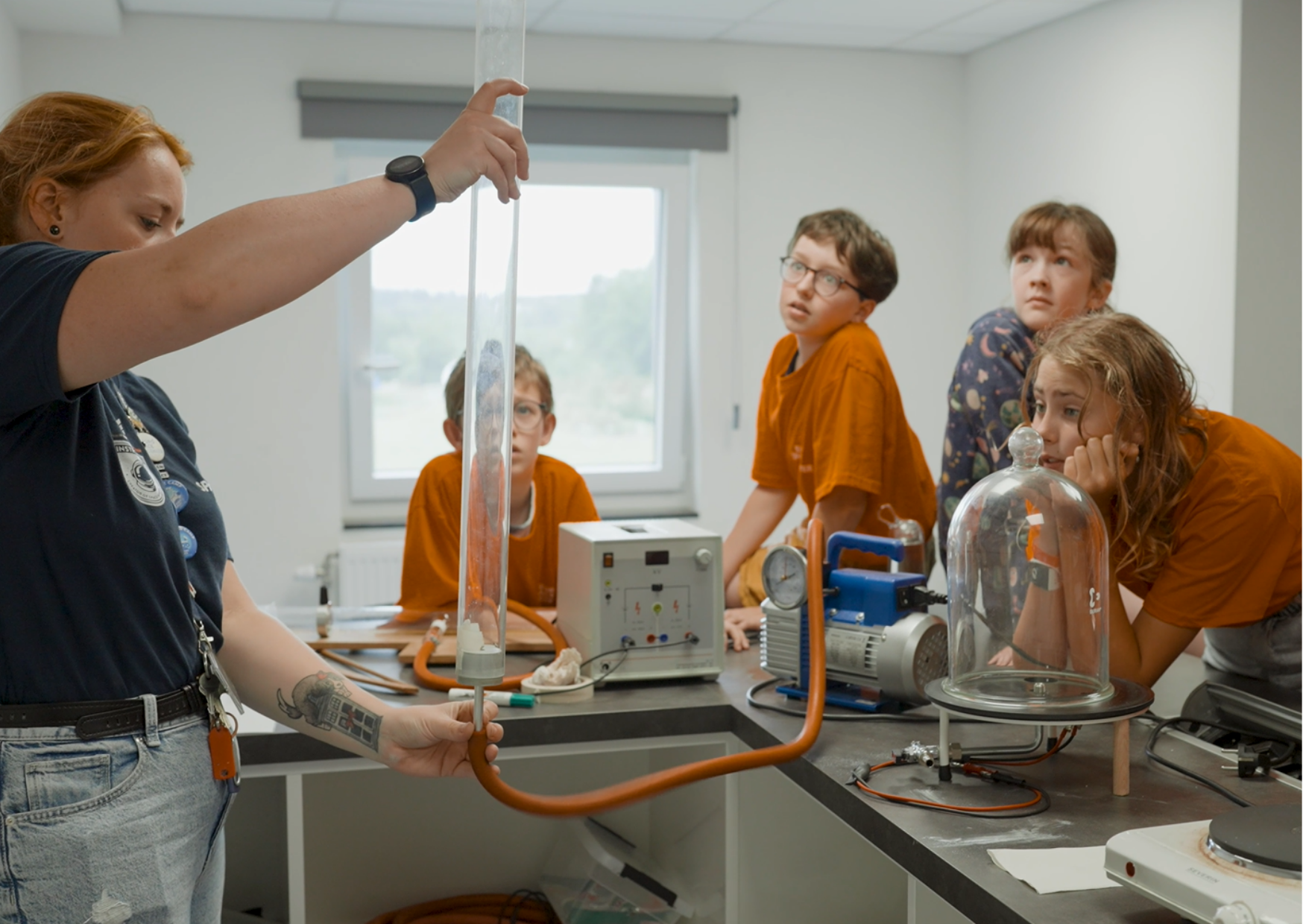
STEM fields can sometimes seem theoretical or abstract, but at the Euro Space Center they come to life through fun and immersive activities: children handle, test, and observe… They understand scientific concepts for themselves and leave with stars in their eyes. It’s an ideal family activity to spark curiosity, encourage creativity, and share a unique moment during a family outing.
Discovering science through space adventure
The adventure begins as soon as you enter: interactive screens, space-themed sets, recreated modules, and hands-on experiences to explore independently. Here, learning happens through movement, touch, and experimentation.
A few examples that amaze both young and old:
- Understanding how a rocket works
- Discovering why planets don’t have the same gravity
- Learning how an astronaut breathes in space
- Imagining how to build a lunar or Martian base
By experiencing these stages, visitors give real meaning to what they learn. This is one of the site’s key goals : turning science into emotion, and learning into adventure.
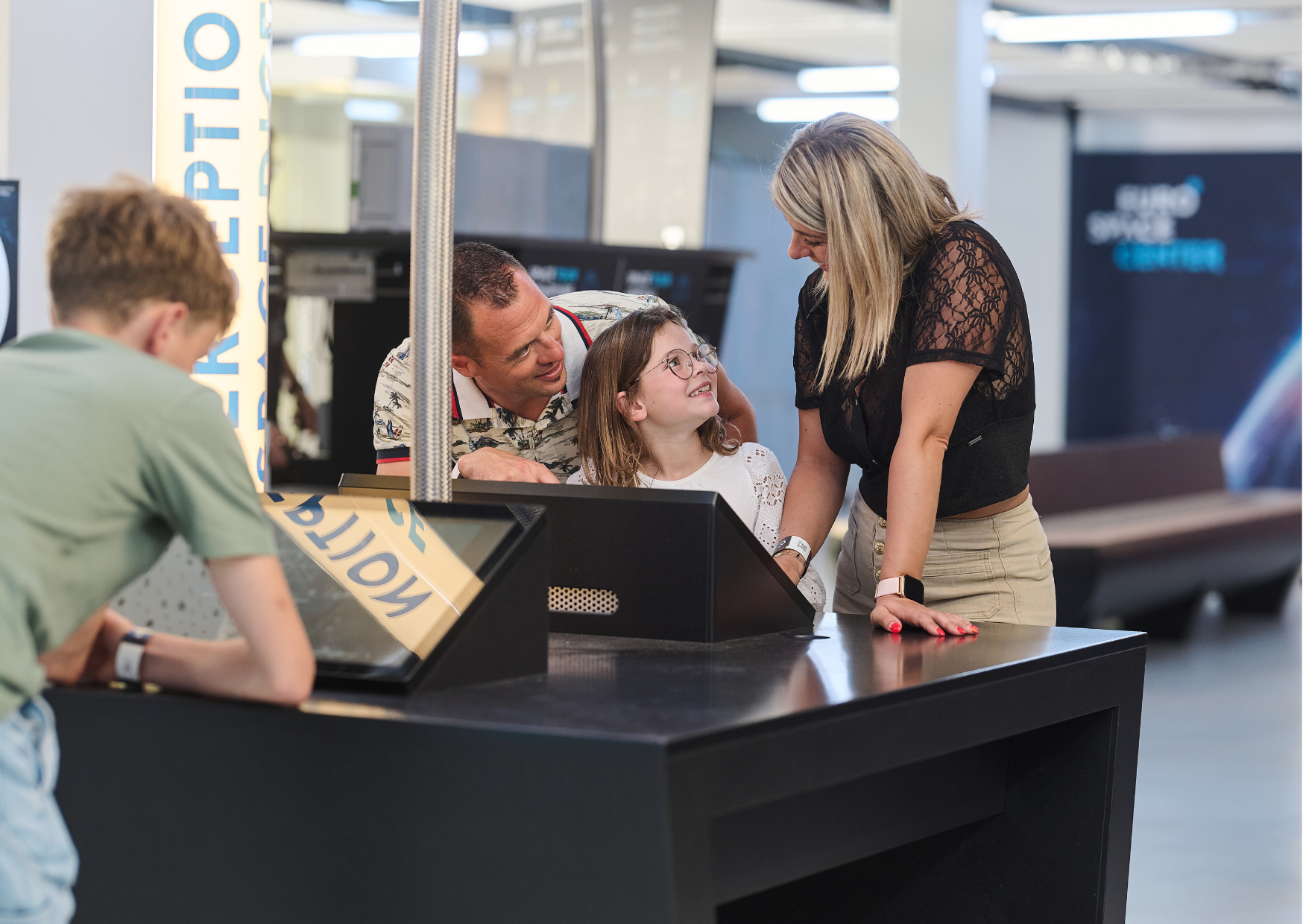
Unique simulators in Belgium
One of the Euro Space Center’s major strengths and a key reason it ranks among the best family activities in the Province of Luxembourg is the presence of simulators inspired by astronaut training.
Parents and children can :
- Test lunar and Martian gravity
- Discover G-forces in the famous Space Rotor
- Take part in an immersive space mission
- Explore 360° digital environments
A spectacular experience, often cited as one of the most original in the Province of Luxembourg.
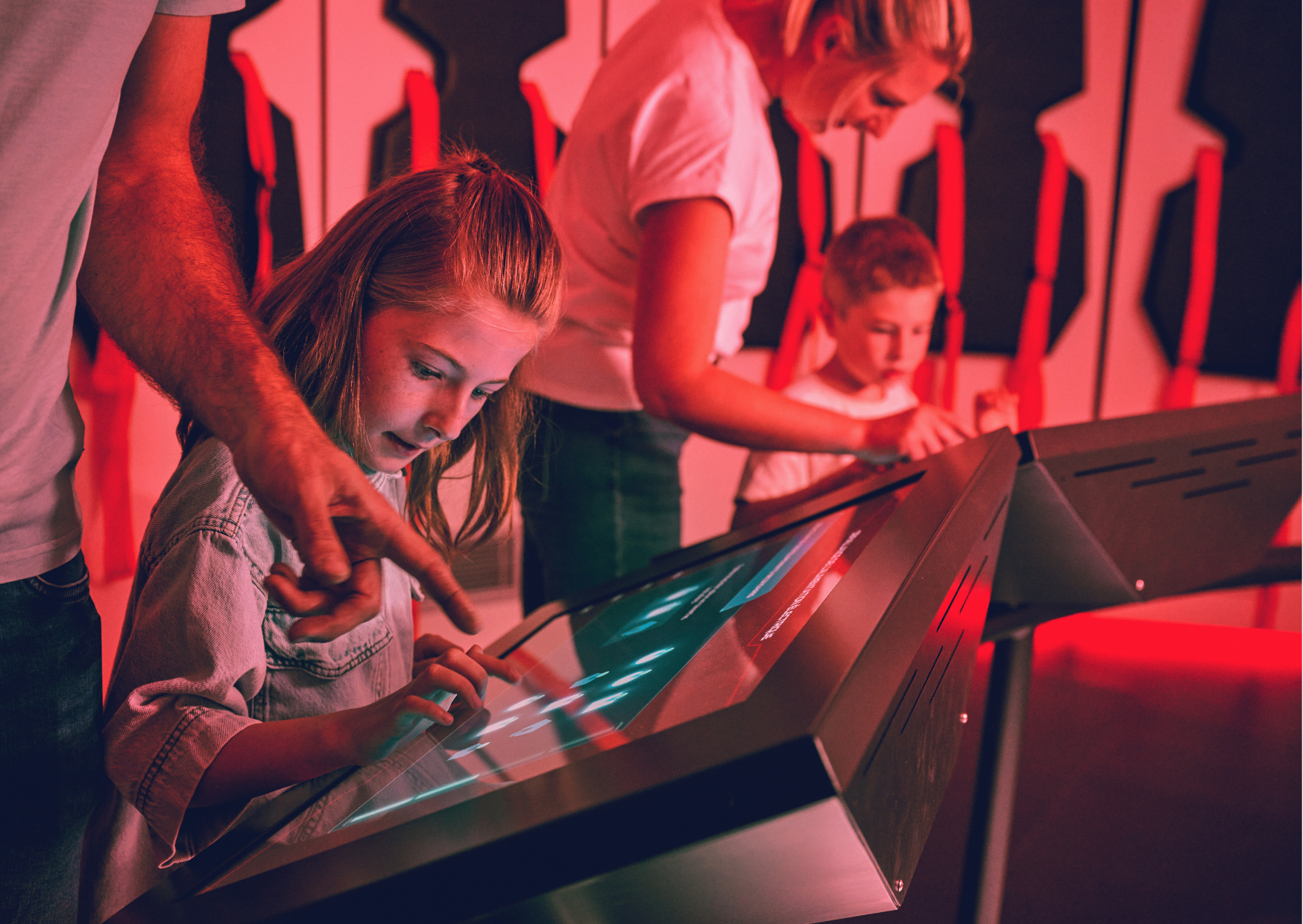
A family outing that inspires dreams
Many children leave exclaiming, “When I grow up, I want to be an astronaut!” And even if that dream may evolve, the essential thing is there: the desire to understand, imagine, and create.
They discover that science, technology, and engineering are not just school subjects, they are gateways to the future. Some will leave with new vocations, others with dreams. Parents, for their part, appreciate the educational value as much as the shared enjoyment.
The Euro Space Center is the ideal family outing to have fun, learn, and experience an extraordinary space adventure.
Frequently asked questions — Sparking children's scientific curiosity through space
Why is space so fascinating to children?
Space raises questions that naturally appeal to children's curiosity: how does a rocket lift off, why do astronauts float, could humans live on Mars and are there other habitable planets? These questions provide an engaging way to explore physics, astronomy, technology and engineering while encouraging children to imagine, investigate and look for explanations.
How can space help get children interested in science?
Scientific curiosity often begins more easily with a question or an experience than with an abstract concept. During a day visit to the Euro Space Center, children can experience different levels of gravity, discover the effects of centrifugal force or take part in the exploration of Mars. The experience then becomes a starting point for understanding the scientific phenomenon behind it.
What STEM subjects can children discover at the Euro Space Center?
A day visit introduces children to several STEM fields: science, technology, engineering and mathematics. They can discover lunar and Martian gravity with Moon Walk XP and Mars Walk XP, centrifugal force in the Space Rotor, scientific Mars exploration with Mars Explorer, astronomy in the Planetarium and the technologies required to live and work in space in the Mars Village and Space Tour.
How does the Euro Space Center make abstract science easier for children to understand?
Children do more than read or observe: they experiment. In the Space Rotor, they experience the effects of centrifugal force. Moon Walk XP and Mars Walk XP show how different gravity changes movement. In Mars Explorer, visitors select exploration zones, scan points of interest and collect scientific data. Each activity therefore connects a scientific concept to a tangible experience.
Does a child already need to like science to enjoy the Euro Space Center?
No. A day visit is not based solely on scientific explanations: it combines exploration, challenges, simulators, immersive environments and interactive experiences. A child may first be attracted by Mars, astronauts, rockets or the activities themselves and then gradually discover the science that explains what they are experiencing.
What age is suitable for discovering science at the Euro Space Center?
The day visit is designed for families and is particularly recommended from around age 6 to fully enjoy the scientific content. Some activities have minimum height requirements: 1.10 m for Moon Walk XP, Mars Walk XP, Space Show 5D and LUNAR·X, and 1.30 m for the Space Rotor. Other areas remain available if a child is not yet tall enough for every simulator.
Can parents discover science alongside their children?
Yes. The day visit is designed as a shared family experience. Parents and children can explore Mars together, compare different levels of gravity, discover the history of space exploration and observe the universe in the Planetarium. The activities also provide opportunities to ask questions, compare observations and continue discussing science as a family after the visit.
How long does a scientific day visit to the Euro Space Center take?
The day visit includes 11 activities and around 6 hours should be allowed to enjoy the full experience. The visit is self-guided with a recommended route, allowing families to progress at their own pace and spend more time on the subjects that interest their children most.