Are you looking for an original school trip for Year 5 or Year 6 pupils? At the Euro Space Center, pupils discover space and science through experiments, simulators and workshops.
Located in Transinne, in the municipality of Libin, in the Province of Luxembourg, the centre welcomes classes for a few hours, a full day or a residential stay.
A school trip for Year 5 or Year 6 at a glance
Which programme should you choose for your class?
The best option depends on the time available, the level of immersion you are looking for and your educational objectives.
| Programme | Duration | Minimum group | Best suited for |
|---|---|---|---|
| Day visit | 2 hours | 12 participants | A first introduction to space and science |
| Mission ISS | 3 hrs 30 min | 12 participants | Combining discovery with simulator training |
| Mission Ariane | 6 hrs 30 min of activities | 12 participants | A full day dedicated to science and experimentation |
| Space Classes | 2, 3 or 5 days | 16 participants | Building a multi-day school project |
Day visit: discover space in two hours
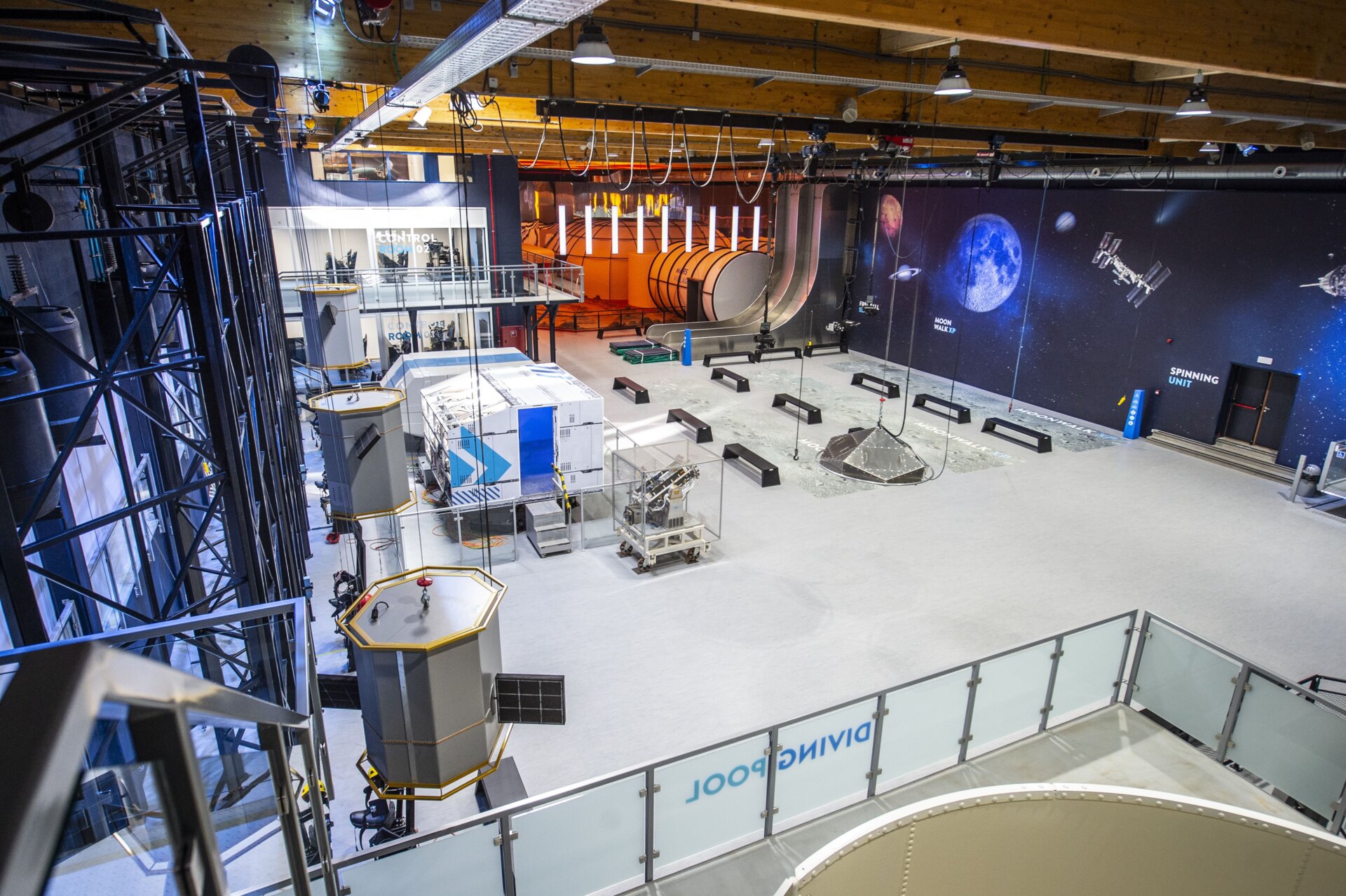
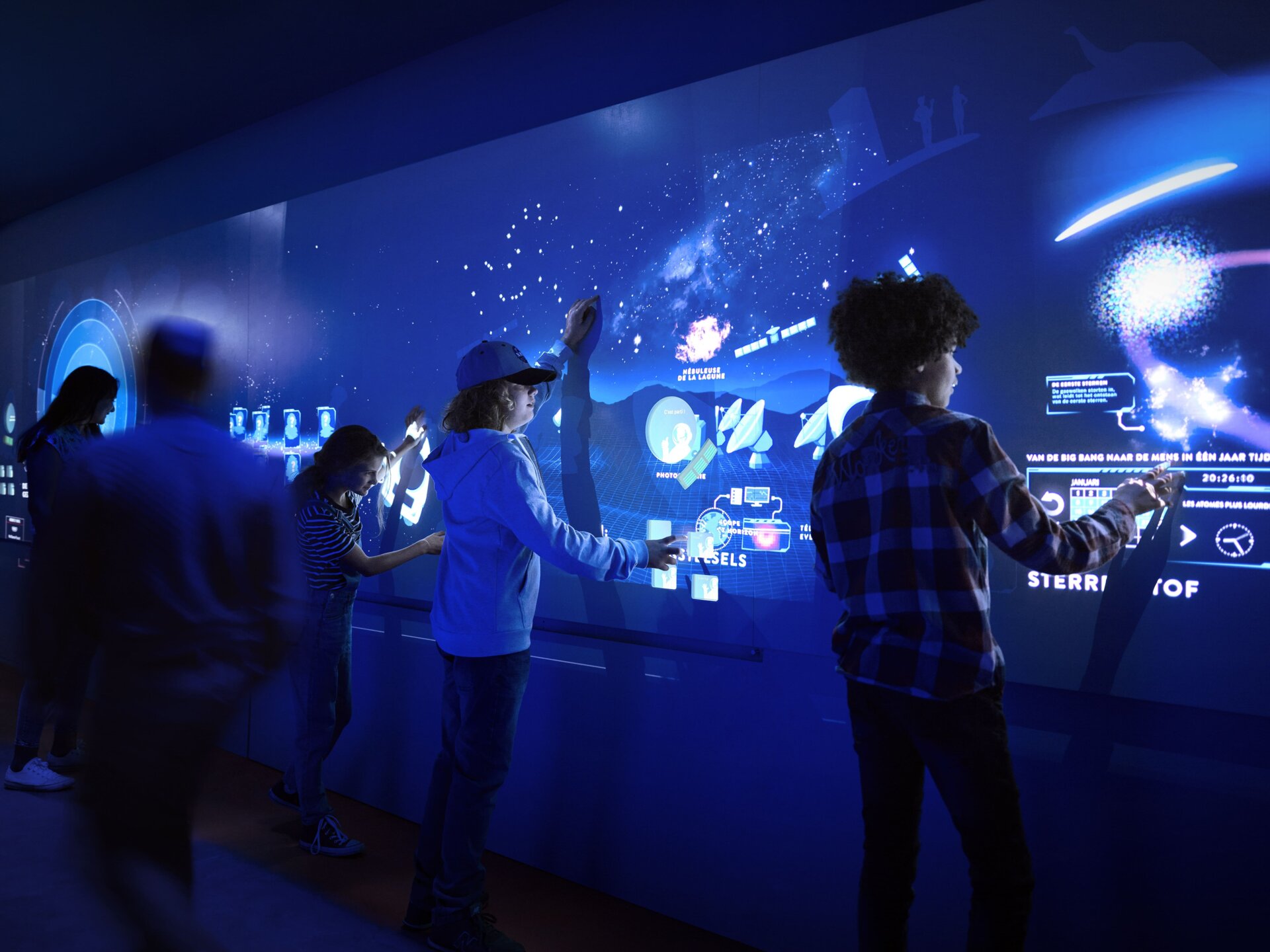
The day visit offers a first introduction through the Space Tour, the Hub and its aptitude challenges, the dynamic Space Show and the Space Rotor.
This format is suitable when the school has limited time available or wishes to include the Euro Space Center as one stop in a wider day trip.
 Discover the Day Visit programme
Mission ISS: more experimentation
Over 3 hours 30 minutes, Mission ISS combines an introduction to space, the Space Tour and experiences inspired by astronaut training.
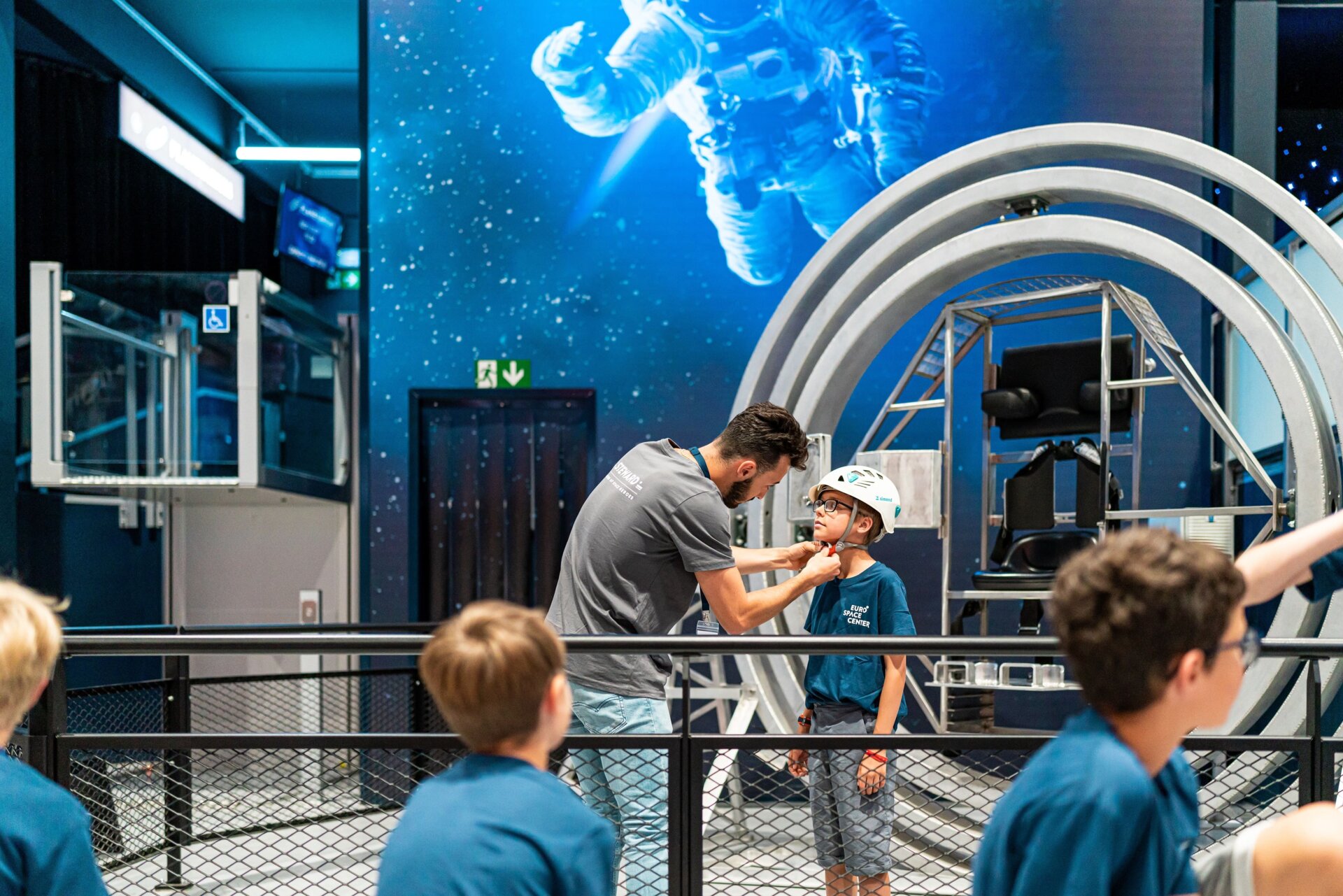
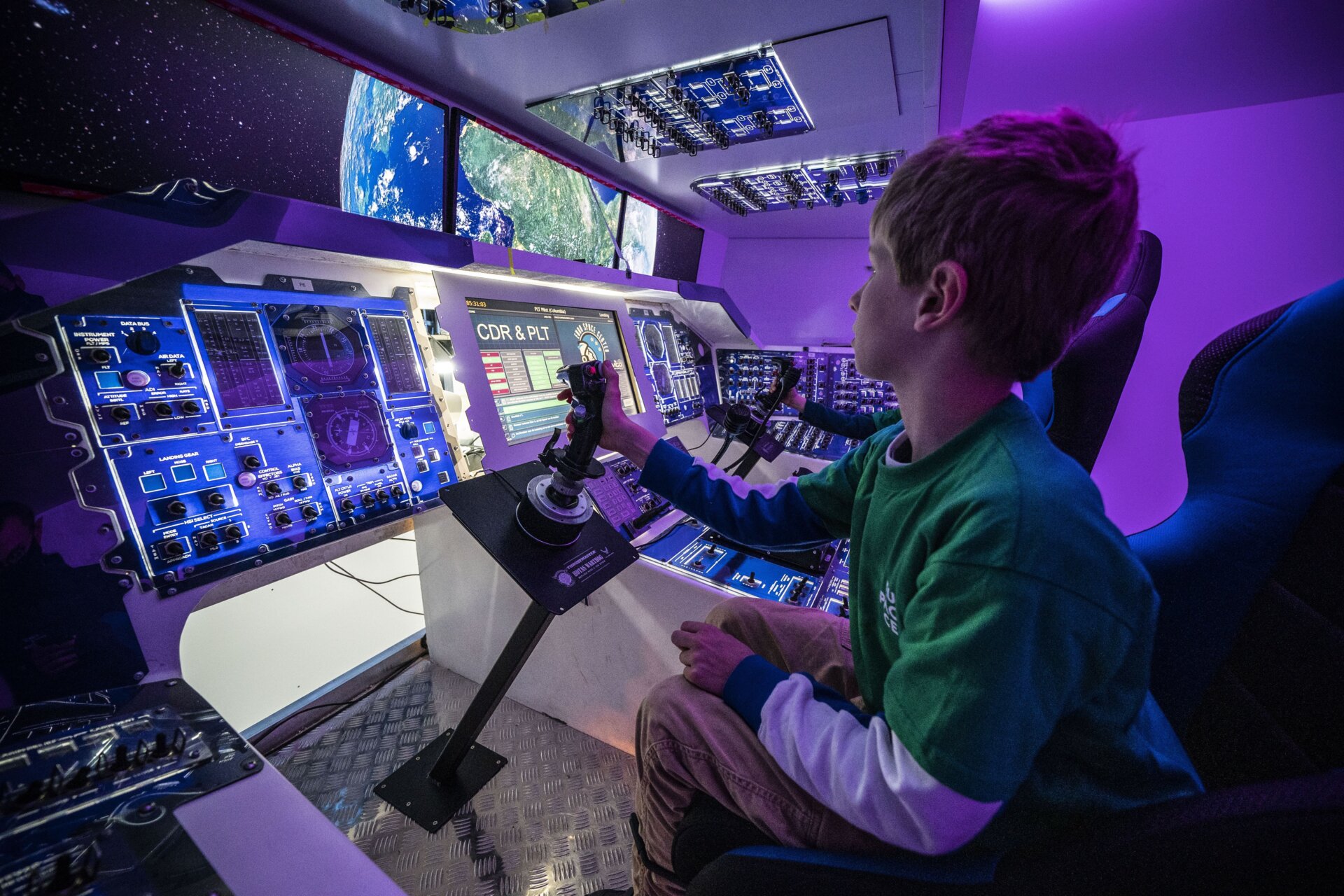
Depending on the confirmed programme, pupils may discover Moon Walk XP, the multi-axis chair or the rotating chair. This option is ideal for classes wishing to spend more time experimenting without planning a full day of activities.
 Discover the Mission ISS programme
Mission Ariane: build and experiment during a full day
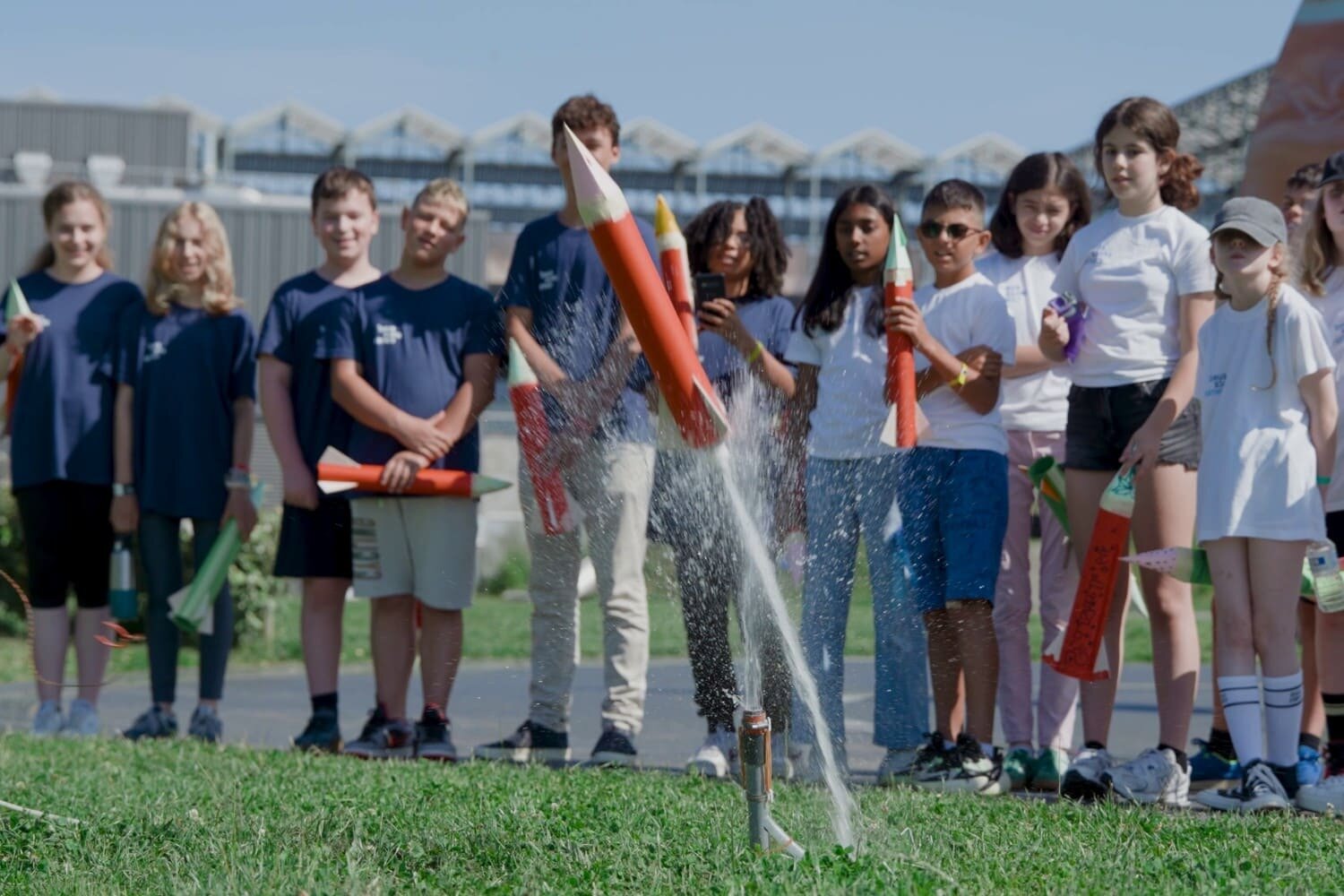
Mission Ariane for 9–12-year-olds combines an introduction to space, Space Tour, Moon Walk XP or Mars Walk XP, the rotating chair, the multi-axis chair and the construction and launch of micro-rockets.
Pupils alternate between discovery, physical experiences and practical activities. This programme is particularly suitable for a science project designed around a full day.
 Discover the Mission Ariane programme
Space Classes: extend the project over several days
Would you like to go beyond a one-day excursion? Space Classes offer stays of 2, 3 or 5 days, with accommodation and meals on site.
Depending on the duration and programme, pupils take part in space missions, simulator training and scientific workshops. A residential stay provides more time for experiments and for developing a shared class project.
What can pupils learn in Year 5 and Year 6?
Experiencing a simulated Moon walk, testing balance or observing the launch of a micro-rocket helps make science meaningful through experience. Pupils use their sensations and observations as a starting point for asking questions and gradually developing explanations.
Gravity, weight and mass
Moon Walk XP and Mars Walk XP provide a practical way to introduce the difference between mass and weight by connecting a scientific concept to a physical experience.
Balance and orientation
The rotating chair and multi-axis chair allow pupils to observe the body's reactions and explore balance, orientation and disorientation.
Propulsion and stability
During Mission Ariane's micro-rocket workshop, pupils discover propulsion and investigate the role of the different components in keeping a rocket stable in flight.
Make the excursion part of your educational project
Before the trip, select two or three questions connected to your project and ask pupils to formulate their initial hypotheses.
During the activities, encourage them to remember one observation, explanation or new question. Back in the classroom, a poster, written report or oral presentation can help them share and structure what they have discovered.
The excursion therefore becomes an extension of classroom learning rather than an isolated activity.
How should you prepare the school trip with your class?
Prepare the group size, pupils' ages, number of accompanying adults, preferred dates and any specific needs. Have the programme, timetable, meals and access conditions for activities confirmed before finalising transport.